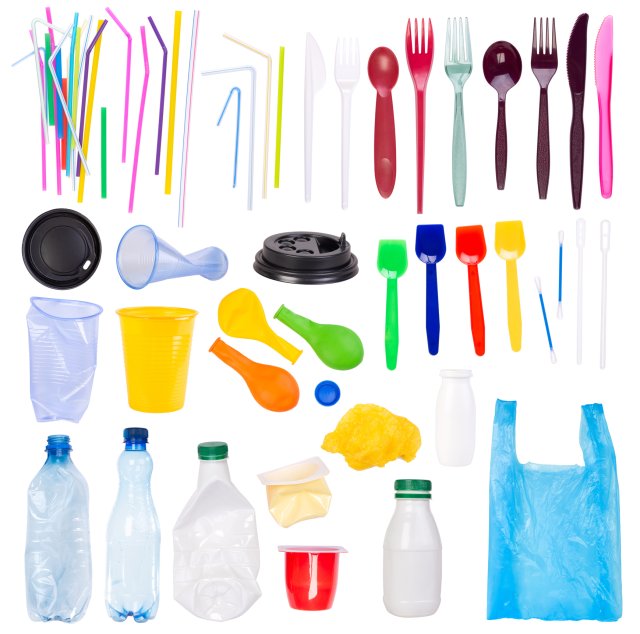
 Back in my day... plastic was not as ubiquitous as it is now. Before WW2, there were only a few things made of plastic that most people ever were in contact with. There was Bakelite, which had been around since 1909, had been used for many small consumer items, such as cases for radios. And nylon, used as a substitute for silk. Development stopped during the war, where research led to all sorts of new kinds of plastic. After the war, there was a huge demand for consumer items, and a desire to be "modern". As plastics developed into stronger and more useful products, it was soon replacing wood, glass, and other materials. It had the advantage of being light and strong, and easy to fabricate or mold into useful products. Look around your house and note how plastic has replaced other materials.
Progress is a two-sided sword; in addition to the advantages it gives us, there are often unforeseen problems along the way. There are three problems facing us; plastic is made from oil, it is difficult or impossible to recycle, and tiny plastic particles are a major source of pollution and other environmental problems.
Look around you and note how much plastic is in your life. Compare this with a movie from 1939 and note how almost everything is organic. Are we better off? Yes, in many ways, but we still need to reckon with the environmental costs. For example, take a look at beverage containers. In the old days, glass was the common material. Sometimes waxed cardboard was used, but it won't hold carbonation very well and doesn't have much strength.. Glass is very reusable. Aluminum is also reusable, but takes more energy to create. Can we go back to a plastic-free world? It would be very difficult at this point. We need to strike a balance to use the advantages of plastic nd minimize its negative effects.