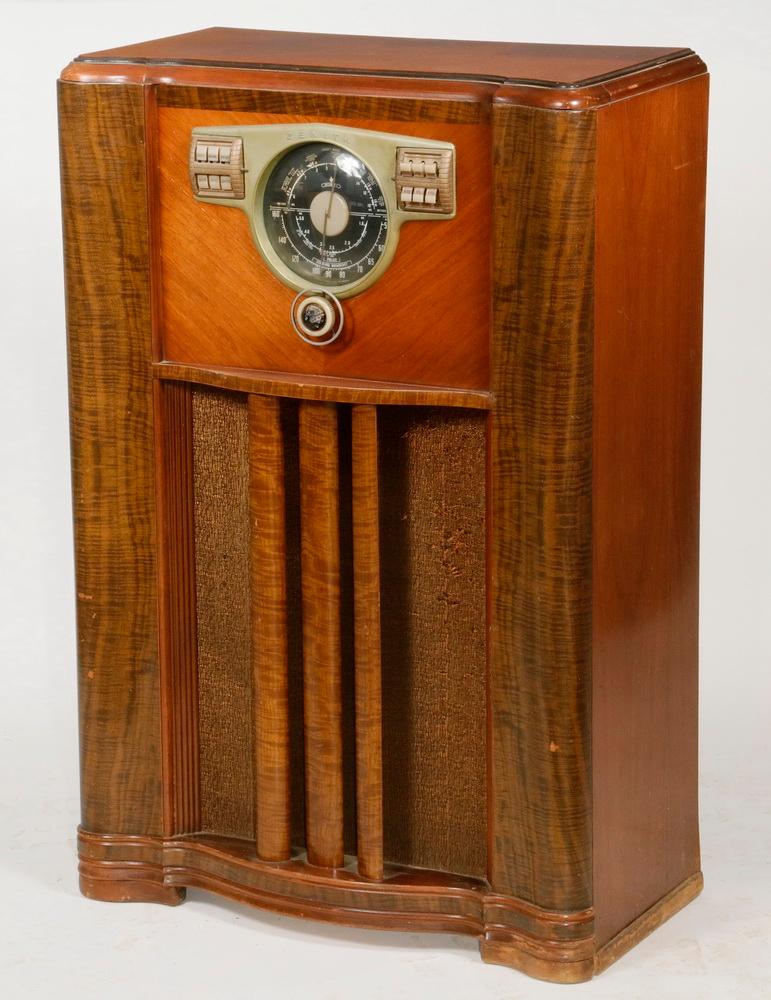
 Back in my day... radio was still a very important medium. Commercial radio had been around since 1920 and evolved into a strong, mature form by 1950. Even smaller communities could have a small station, providing news and entertainment. Stations of any size could affiliate themselves with networks (CBS, NBC, Mutual) to get programs. There were network-owned stations that would provide a wide range of programming. Even in 1960, I can remember the local station would have network programs like Arthur Godfrey, Gunsmoke, and Rosemary Clooney.
Today, there are still some strong local station addressing local needs. Announcers and "disc jockeys" became celebrities and artists. But due to cultural and technological shifts, there is a near-uniform blandness to radio. Many are owned by huge commercial conglomerates like Sinclair Broadcasting, which is the antithesis of objectivity and truth. To reduce costs, many stations also use automated programming and pre-recorded content. theories.
AM as the traditional medium, but FM was starting to take hold. If offered higher fidelity and was initially mostly classical music. Today, much of AM is talk radio, usually of a political nature. It's cheap to create and gets good ratings, but is a bit scary because of the political influence it has, and the fact that so many stations are all now owned by corporate monopolies with little regard for fairness for journalistic responsibility.
In the late 1960s, FM license were cheap, because FM stations didn't generate much money. In fact, much of the revenue of FM came from leasing subcarrier rights to background music services like Muzak.
A new generation of radio folks created FM stations with the kind of programming they would like to listen to, often called underground radio. They offered eclectic programming, much more tuned to the times than the corporate behemoths. Also stereo and high fidelity, and no limits on how long a song could be, as well as far less censorship of language and political thought. Of course this caught notice of traditional broadcasters, and slowly morphed into oldies and album-oriented rock formats that took far less risks and resulted in a bland experience. But hey, more people eat at McDonalds than healthy restaurants.
One of the big limitations of traditional broadcasting is you essentially have to show up at a specific time to hear your favorite show, unless you had a tape recorder. Today, much of what used to be on radio is now provided by podcasting, which allows you to reach content at any time from anywhere. This is a healthy evolution, since the barriers of entry are very low. We are starting to see more large corporate podcasts, but it is also a marvelous opportunity for anyone to become a broadcaster.