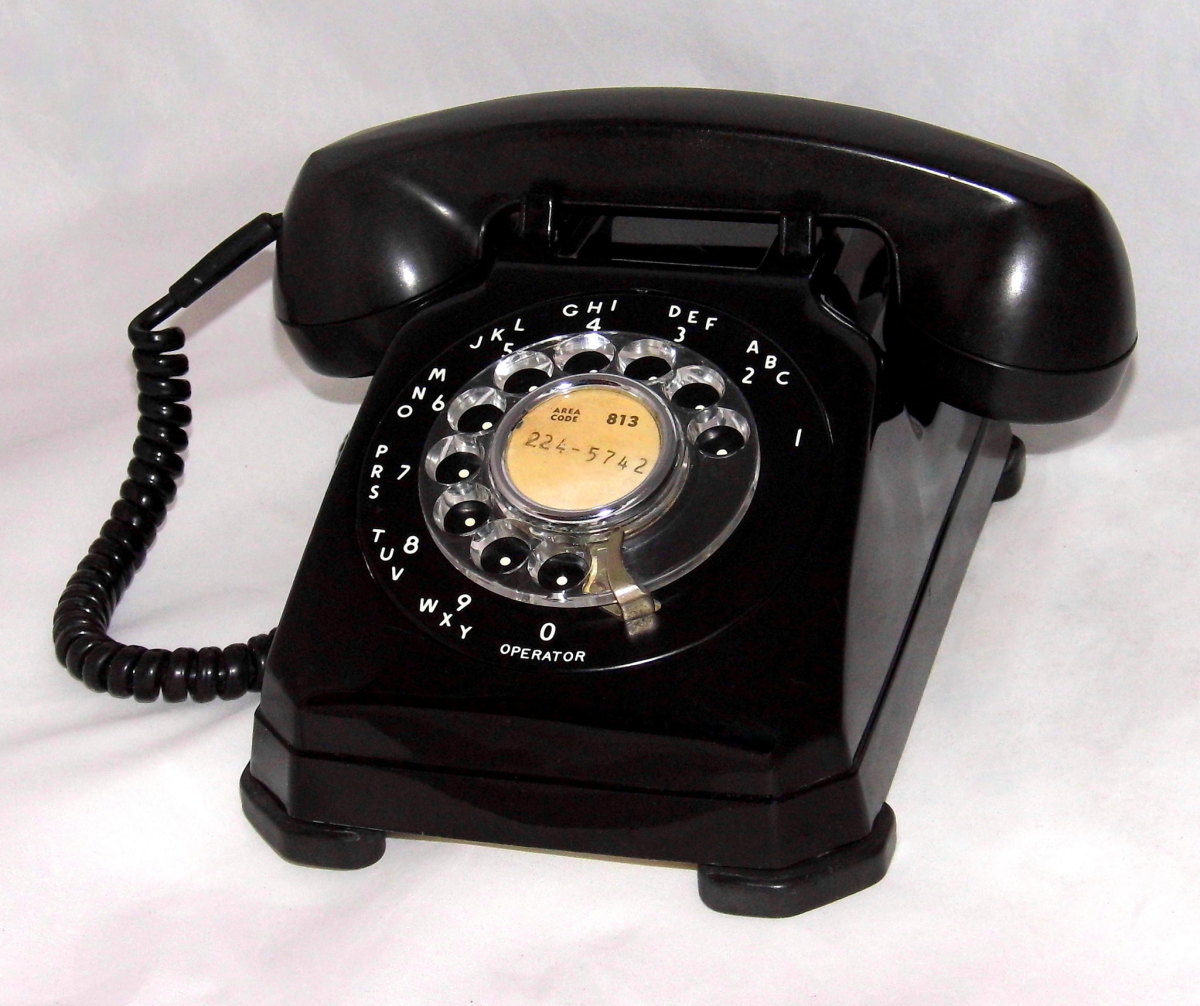
 Back in my day... a telephone was relatively scarce. Most homes had but one phone, many had none. Fortunately, pay phones were ubiquitous in many public places. For most people the "phone company" was the Bell System, a monopoly that bought out local exchanges and before the breakup served about 99% of all households.
When you got out in the country, where the cost of running individual lines long distances, you could get a party line. This was a single number shared by many customers; each had a unique ring pattern (like "one long two short"). This means your neighbors could eavesdrop.
And you didn't own your phone; it was rented from the phone company. You couldn't attach anything to your line, such as a modem or fax machine, unless you leased them from the phone company. They were build by Western Electric, the manufacturing arm of Bell. They were incurably rugged and reliable instruments, designed to last practically forever. The theory was that by controlling the types of equipment that could be hooked to the phone network it would be more secure and reliable. But it also limited technical innovation.
Hackers and internet geeks had a love/hate relationship with the phone company. It was admired for engineering excellence and reliability, but despised for being a closed system.
To make a long-distance all often involved first calling the operator, who would create a connection and ring you back in a few minutes. Billing was by the minute. Long distance calls could get expensive and were a special thing back then. Today most home plans include unlimited long distance.
Wireless phones were very rare and expensive and usually involved radio equipment that would go in the trunk of your car. Since they were hard-wired, you would pick a fixed location in your house for a phone, often a little nook. And of course all you could do was make phone calls, no apps back then.